
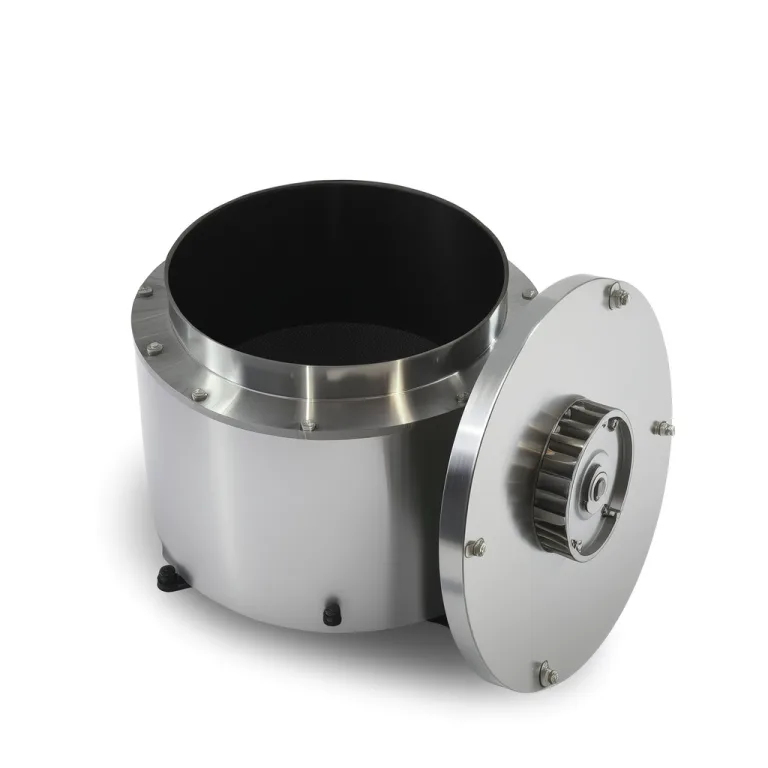
Ceramic Ball Mill
Ceramic Ball Mill for industrial applications.
About Ceramic Ball Mill
Ceramic Ball Mill for industrial applications.
| Domain | ceramics |
|---|
Who Works With Ceramic Ball Mill?
12 engineering roles are connected to Ceramic Ball Mill based on verified research evidence.
Maintenance Technician
Safety Officer
Process Engineer
Beverage Process Engineer is a recognized engineering role specializing in process design, validation, and compliance for beverage manufacturing systems. While 'Beverage' denotes industry context (not product-specific specialization), the role directly engages with ribbon blenders — particularly in specification, commissioning (including IQ/OQ), CIP/SIP integration, and 3-A sanitary validation — all cited in job listings. 'Process Engineer' is the canonical, general professional title; 'Beverage' reflects domain application, not an inseparable part of the core role definition.
Quality Inspector
Quality Inspector is a widely recognized professional role in manufacturing and industrial engineering, responsible for verifying conformance to specifications and standards. In the context of ceramic ball mills, this role performs quality checks on components (e.g., ceramic liners, grinding media, structural integrity) and final assemblies. The term is generic—not product-specific—and aligns with ISO 9001 and ASQ-defined roles.
Materials Engineer
Materials Engineer is a widely recognized professional engineering role. In the context of a Ceramic Ball Mill — a product whose performance critically depends on ceramic material properties (e.g., wear resistance, thermal stability, fracture toughness) — a Materials Engineer contributes to material selection, formulation optimization (evidenced by 'knowledge of ceramic formulations'), design validation, and testing of ceramic components (e.g., liners, grinding media). While specialization in ceramics is implied, 'Materials Engineer' remains the canonical, discipline-level role; 'Ceramic Materials Engineer' would be a specialization but is not the input text.
Quality Control Technician
Quality control personnel is a widely recognized occupational role in manufacturing and industrial engineering contexts, especially in welding where weld integrity is critical. In the context of submerged arc welding machines, they perform inspections and testing (e.g., verifying weld parameters, inspecting weld quality, maintaining inspection logs) — directly supporting product reliability and compliance. While 'personnel' is generic, 'Quality Control Technician' is the standard professional title in ISO/ASME/EN welding standards (e.g., AWS QC1, ISO 3834). The role is not product-specific (no embedded reference to 'welding machine' or 'SAW'), so product_specific_title = false.
Ball Mill Operator
Ceramic Ball Mill Operator is a recognized industrial operations role specifically tied to operating ball mill equipment in ceramic manufacturing. While 'Ceramic' denotes the application domain (not a unique profession), the core function — operating, monitoring, and maintaining ball mills — aligns with the standardized occupational title 'Ball Mill Operator', widely used in mineral processing, ceramics, and powder technology industries. Evidence from job boards (e.g., Indeed) confirms its use as an active, real-world job title with defined responsibilities directly tied to the product.
Compliance Officer
Compliance Officer is a widely recognized professional role responsible for ensuring adherence to regulatory standards (e.g., ISO, ANSI) applicable to product design, manufacturing, testing, and documentation. In the context of a Ceramic Ball Mill, this role would oversee compliance with safety, quality, and environmental standards during specification, inspection, testing, and lifecycle management.
Inventory Clerk
Inventory clerk is a widely recognized operational role responsible for tracking, receiving, storing, and issuing materials — including raw ceramic powders used in conjunction with ceramic ball mills. While not directly involved in operating or maintaining the mill itself, they manage inventory of consumables (e.g., ceramic grinding media, powders) essential to the mill's function in industrial ceramic processing.
Inspection Technician
Inspection Technician is a widely recognized professional role in industrial engineering, especially in regulated sectors like chemical processing. In the context of Bag Filter Housing — which must comply with material compatibility (e.g., PTFE lining), pressure integrity, explosion venting, and inspection protocols — this role performs critical pre-commissioning, in-service, and post-maintenance inspections. The title is generic (not product-specific), aligning with standard occupational classifications (e.g., O*NET 45-4022.00, ISO/IEC 17020).
Production Technician
Production team member is a standard operational role in manufacturing environments; in ceramics processing, such personnel operate, monitor, and perform routine checks on equipment like ceramic ball mills. While 'team member' is generic, it maps to the widely recognized entry/mid-level production role — standardized as 'Production Technician' per O*NET and ISO 9001 operational role frameworks. The context confirms direct involvement with the Ceramic Ball Mill in production workflows, supporting operation, inspection, and basic maintenance coordination with QC.
Production Coordinator
Batch coordinator is a recognized operations role in process manufacturing (including ceramics), responsible for planning, sequencing, and overseeing batch-based production activities — such as raw material preparation, loading, milling cycles, and discharge in ceramic ball mill operations. While 'batch' refers to the process unit, the title itself is not product-specific (e.g., not 'Ceramic Ball Mill Batch Coordinator'), and 'Production Coordinator' is the standardized industry term. The role directly manages batch execution involving the ceramic ball mill, including specifying batch parameters (e.g., charge ratio, dwell time), coordinating operation, and ensuring compliance with process recipes.